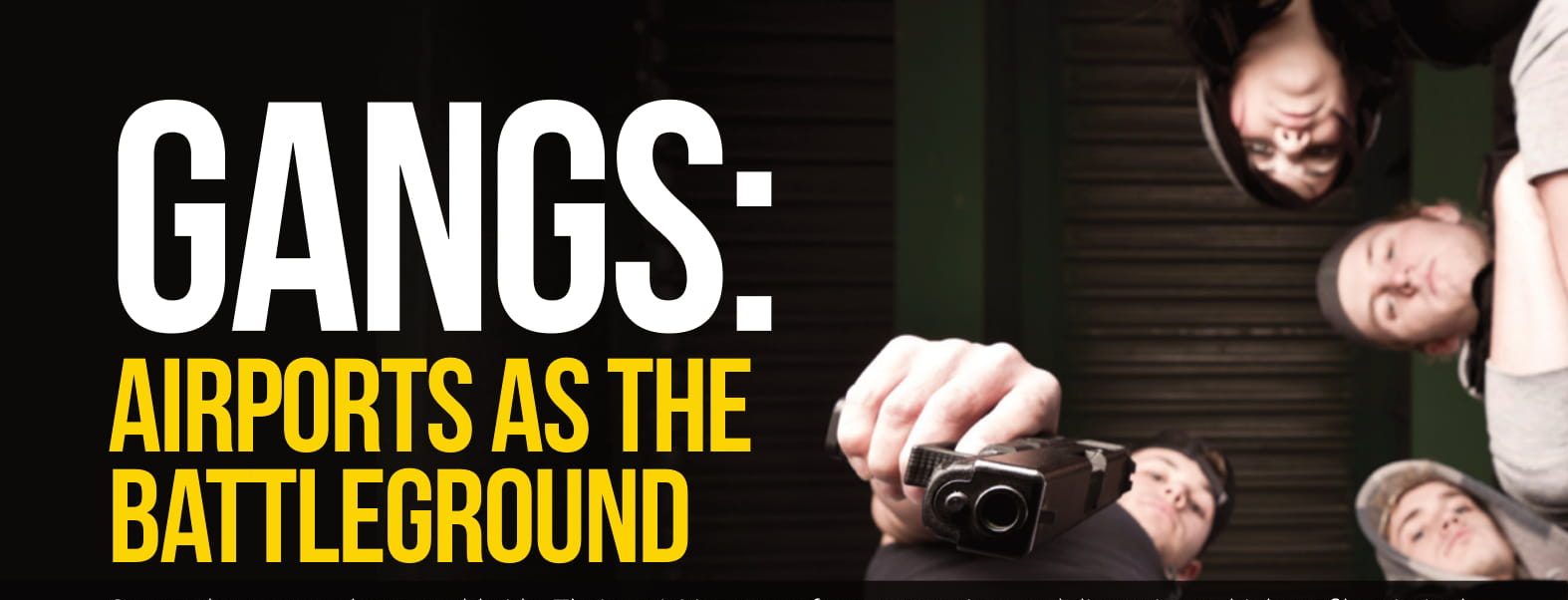
Gangs: airports as the battleground

Gangs; they cause chaos worldwide. Their activities range from petty crime and disruption to high profile criminal activities. Transnational gangs are the ultimate entrepreneurs, relentless in conducting their business and harder to control the more lucrative and powerful they become. They fill the gap in the global supply of illegal goods and services, operating a parallel economy, which does not abide by national or international laws and regulations but by their own customs, and ones which can adapt and change rapidly. Those who run and coordinate high profile gang activities constantly push to stay one step ahead of the law and employ a plethora of approaches to conducting their enterprises and preventing recognisable patterns in their activities. These groups pose a great challenge for the airports that become their targets or the grounds upon which they carry out their business. But, how do gangs use airports, what can be learnt from their activities at airports over the last few years and what should our takeaways be regarding how these diverse groups are dealt with? Lucy Rawlings explores.
By |2025-04-09T11:41:33+00:00February, 2019|

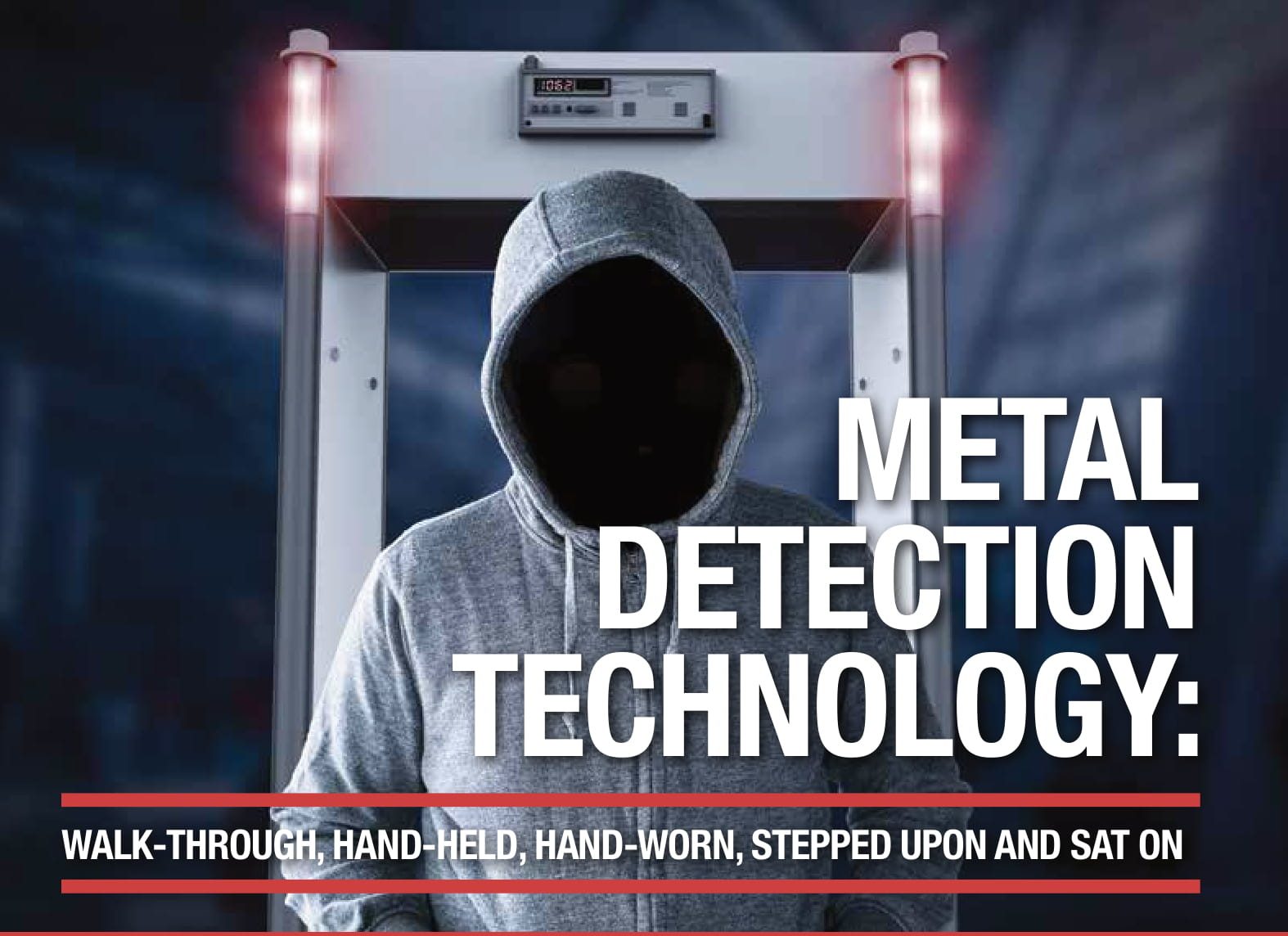
Metal Detection Technology: walk-through, hand-held, hand-worn, stepped upon and sat on

Civil aviation remains a prominent target for terrorism and other criminal activity. As such, there is a need to continuously evolve and update security procedures, techniques and, of course, technology. The industry must remain open to new technologies such as advanced imaging technologies (also known as full-body scanners). We must also ensure the continued research and development of the ways in which technologies currently deployed can be updated, remain relevant, and be effective tools in the aviation security arsenal. An important consideration is also the time factor – passengers should be moved through checkpoints as quickly and smoothly as possible so not to create bottlenecks and large queues, which are themselves a target. Lucy Rawlings looks into some of the latest developments in the metal detection technologies available to the security sector and discusses their ongoing relevance in a world in which many prominent security threats contain zero metal content

By |2025-04-09T11:54:29+00:00June, 2018|

Hijack Syndromes: whatever happened in London, Stockholm and Lima?

The practice of hostage-taking and kidnapping has a long and established history, both in aviation related incidents and other situations. Hostages have been known to react to captivity in a variety of ways, sometimes using their behaviour to manipulate their captors’ actions, and ultimately affecting the outcome of the situation. Lucy Rawlings examines this behaviour and describes three of the main syndromes experienced by those involved in hostage-taking situations.

By |2025-04-09T11:47:18+00:00December, 2017|

Armlet: setting-up an air marshal training centre

In September 2016, delegates from across the Europe gathered in Bucharest to attend the closing conference for the Romanian-led ARMLET project. Lucy Rawlings attended the event to report on the initiative itself and witness first-hand some of capabilities of the air marshals trained as part of this European Union-funded programme.

By |2025-04-09T11:59:42+00:00December, 2016|

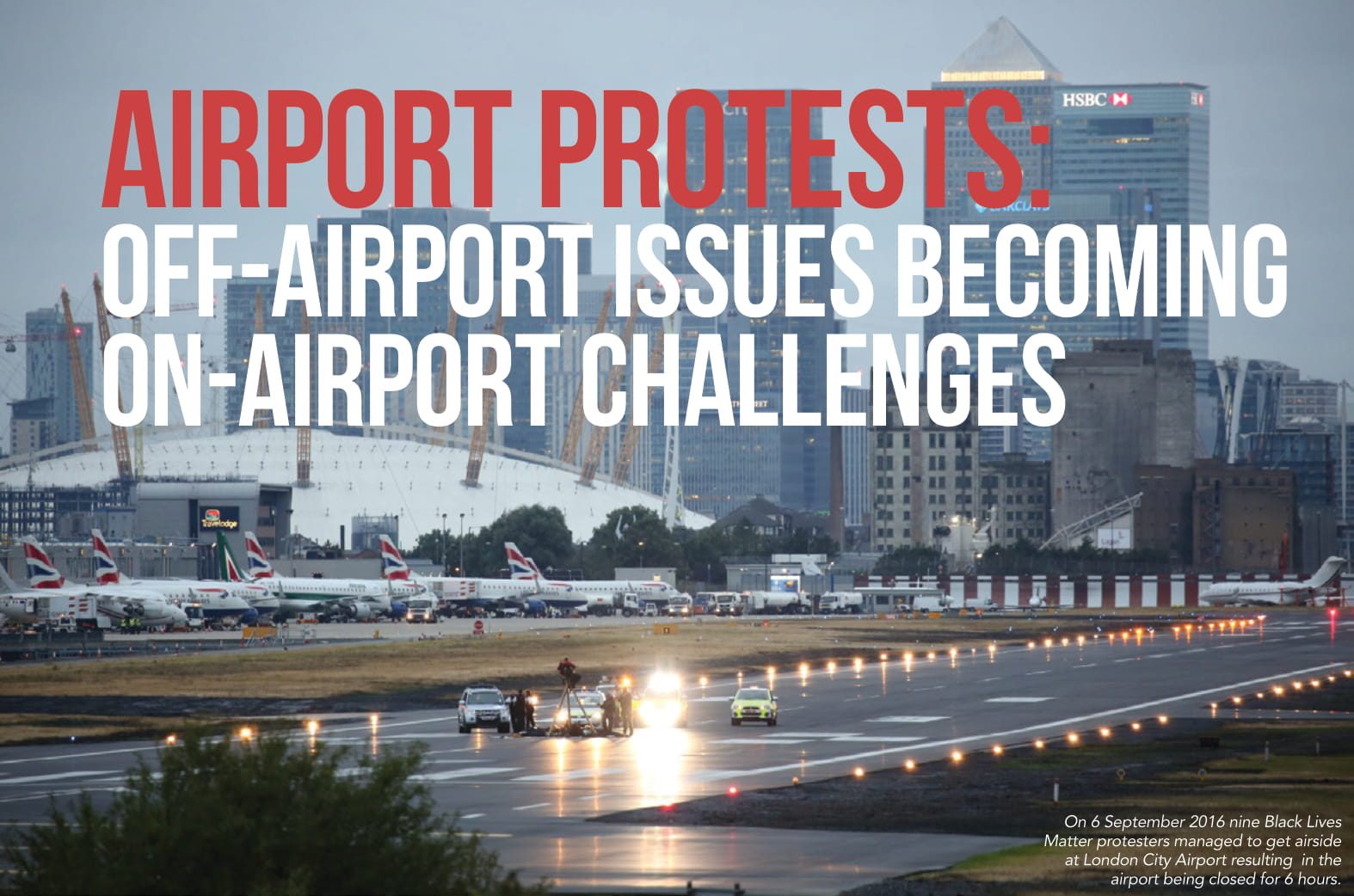
Airport Protests: off-airport issues becoming on-airport challenges

Airport terminals have long provided protestors with a safe and effective environment for spreading international awareness of an array of issues. More often than not, demonstrations are conducted peacefully, causing little to no interruption of services and procedures, but what are the risks associated with protests in an airport setting? Lucy Rawlings discusses these issues and considers whether our right to protest is impinging on the effectiveness of our security measures.

By |2025-04-09T12:00:10+00:00October, 2016|

MH17: who is to blame?

The shooting down of Malaysia Airlines flight MH17 on 17th July was a tragedy. Naturally, if it is indeed proven that an anti-aircraft missile brought the aircraft down, those who fired the shot bear responsibility. However, the aviation industry must also ask itself the question as to whether it could have taken action to ensure that commercial flights did not operate over eastern Ukraine. Lucy Rawlings investigates the role of the airline, the State and international bodies, such as ICAO, EASA and Eurocontrol, in determining when aircraft should not operate over conflict zones. And, in conclusion, she considers some of the other volatile areas of the world where it may well be advisable to classify air space as being 'no-fly zones'.

By |2025-04-09T12:10:10+00:00August, 2014|
Go to Top